

Global app installs surged by 10% heading into 2026, driving consumer spending to a record $167 billion, according to Adjust's latest Mobile App Trends report. Yet, despite this massive digital expansion, recent industry analytics highlights a brutal reality for developers: 70% of users immediately delete an application if the initial onboarding experience is slow or invasive. In our work as a digital identity researcher, I have found that demanding a personal phone number during a basic account sign-up is the primary cause of this user friction. For modern privacy protection, the most effective solution is utilizing service-based temporary verification—specifically shared SMS networks and temp mail—rather than relying on persistent VoIP calling applications.
Users who want to protect their primary phone number generally choose one of three approaches: a persistent VoIP calling app, a high-security authenticator app, or a temporary verification service. Understanding the technical differences between these methods is critical for maintaining digital anonymity without getting blocked by modern registration filters.
Persistent communication apps fail modern privacy requirements
There is a widespread misconception that downloading a free text app automatically grants you privacy. Applications like TextNow, Google Voice, Talkatone, and Pinger were engineered over a decade ago for persistent communication. Their primary function is to serve as a cheap or free 2nd phone number so users can call family, text friends, or run a small business from their mobile device.
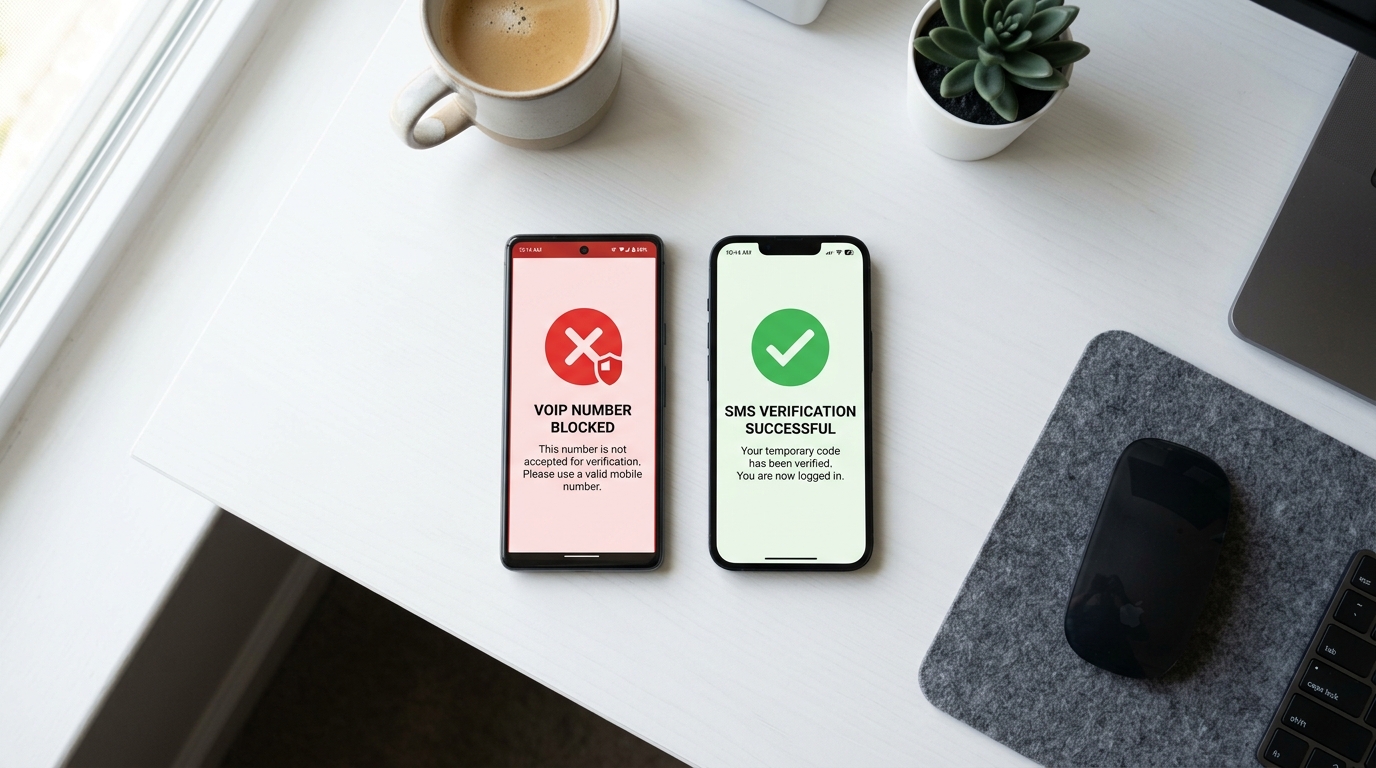
When we compare these tools to modern verification requirements, the flaws become obvious. First, setting up a TextFree or TextMe account usually requires you to hand over your real email address or primary phone number to register. You are simply trading one data point for another. Second, because these VoIP blocks are static and easily identifiable, major platforms—from ride-sharing apps to social media networks—flag and block them at the registration gate.
The iOS App Tracking Transparency (ATT) opt-in rates recently hit 38% in Q1 2026. This indicates that while some users are comfortable sharing data for targeted ads, a massive 62% majority actively restrict tracking. Using a persistent TextPlus or Google Voice number across multiple platforms creates a static identifier that analytics engines use to link your activities, effectively defeating the purpose of opting out of tracking.
Service-specific verification outperforms legacy phone numbers
If persistent calling apps are failing, the alternative is service-based verification. This is where tools like Receive SMS&Temp Mail: CodeApp differ fundamentally from traditional burner applications.
A service-based tool is not designed for calling your friends. It is a highly specialized routing utility built strictly to receive verification codes. When you need to register for a new platform, you request a temporary SMS number allocated specifically for that service. Because these numbers are rotated frequently and routed smartly, they bypass the VoIP filters that block standard TextNow or Talkatone numbers.
As my colleague Tuna Kılıç detailed in his technical breakdown regarding why second numbers fail SMS filters, the infrastructure behind shared verification networks is entirely different. You do not maintain ownership of the number. You use it for the ten seconds required to verify an account, and then you discard it. This ephemeral approach breaks the data chain, making cross-platform tracking impossible.
Temporary email filters offer faster access than traditional inboxes
Phone numbers are only half of the registration equation. Most platforms also demand an email address. The traditional approach is to create a secondary "junk" email account via Gmail or Yahoo. However, creating those accounts now frequently triggers a demand for—ironically—a phone number verification step.
Comparing a secondary inbox to a temp mail service reveals a stark difference in efficiency. A temp mail generator provides an active, functional inbox instantly with zero registration required. When you are testing a new software tool or downloading a coupon, generating a temporary mail address takes one second. Once you receive the confirmation link, the inbox can be safely abandoned. It protects your primary inbox from data breaches and aggressive marketing campaigns without the administrative overhead of managing multiple passwords.

High-security authentication requires an entirely different workflow
It is important to address where an authenticator app fits into this ecosystem, as users often confuse them with SMS verification tools. Tools like Google Authenticator or Authy are not designed for anonymous onboarding.
An authenticator app generates time-based one-time passwords (TOTP) locally on your device for accounts you already own and want to secure heavily. You use this for your bank account, your primary email, or your company's administration panel. They provide excellent security, but they offer zero privacy during the initial account creation phase because the platform still requires your underlying identity to set up the account. They are a security layer, not a privacy shield.
Choosing the correct privacy layer depends on the application's lifespan
Selecting the right privacy tool is simply a matter of matching the technology to the lifespan of the task. As developers of mobile utility applications, we see how frequently users apply the wrong tool for the job.
- For permanent business communication: If you need a line to print on business cards or to maintain long-term contact with clients, a persistent VoIP tool like Google Voice or a dedicated 2nd phone number app is the correct choice.
- For securing high-value assets: If you are protecting a cryptocurrency exchange or a primary email address against hackers, an authenticator app is mandatory. Avoid SMS entirely for these high-risk targets.
- For initial account registration and privacy: If you are signing up for a retail app, a dating platform, or a web forum, you want maximum privacy and minimal friction. Receive SMS&Temp Mail: CodeApp provides the necessary temporary SMS and temp mail routing to verify the account quickly without leaving a permanent data trail.
The mobile economy is shifting rapidly. As tracking architectures become more sophisticated, static identifiers like legacy VoIP numbers are becoming a liability. By separating your actual communication tools from your verification workflows, you maintain strict control over who holds your data and how it is used.