

A few months ago, while reviewing sign-up patterns across temporary verification tools, I noticed something that has become impossible to ignore: most people searching for a second phone number are not actually trying to build a long-term calling setup. They want a working phone number for one specific task, usually verification, and they often pair that need with a privacy-first inbox such as ProtonMail or another disposable email workflow. That shift matters because it changes what users should look for, and it changes how apps in this category should be judged.
From my perspective as a digital identity researcher, the trend is clear. The old model was “get another number so you can call or text.” The newer model is “get temporary access to verification channels without exposing your personal identity stack.” Those are related needs, but they are not the same product decision.
The category has moved from communication to verification
For years, the broader market treated a second line as a communication tool: a spare number for calls, SMS, business outreach, or travel. That model still exists. In fact, recent 2026 coverage from OpenPhone’s roundup of second phone number apps makes that framing explicit, noting that many people want a second number to separate personal life from client calls, shopping, or travel. That is a real use case.
But user behavior has become more fragmented. People now create accounts more often, across more services, with more concern about spam, tracking, resale of contact data, and account linking. So the practical demand has shifted toward a service-based, temporary verification model: users want temporary number or temporary mail access tied to a specific service, not a full replacement for their mobile carrier.
This is where category confusion still causes bad choices. Someone compares a virtual calling app, a burner number tool, an authenticator app, a temp mail inbox, and a receive-SMS utility as if they solve the same problem. They do not. If your actual need is one-time verification for a social app, marketplace, or regional sign-up page, the best option is usually the one that gets you the code quickly and predictably—not the one with the longest feature list for calling.

Users now value separation more than permanence
The strongest market shift is psychological. People are less interested in owning yet another permanent digital endpoint and more interested in controlling exposure.
That means the modern user often thinks in layers:
- personal phone number for family, banking, and trusted contacts
- secondary or temporary phone access for sign-ups and low-trust platforms
- primary email for important accounts
- privacy-oriented mail or a temporary email address for experiments, trials, and newsletters
In practice, I often see people combine an extra number workflow with a ProtonMail account, not because ProtonMail and temporary SMS are interchangeable, but because both reflect the same intent: limit unnecessary exposure. A privacy-focused mailbox helps reduce linkability on the email side; a temporary or shared verification number reduces exposure on the phone side.
That pairing is one reason the market no longer belongs only to classic “text now” or “text free” style expectations. Those labels still matter in app store search behavior, and users still look for terms like textnow, google voice, pinger, burner, or talkatone. But the underlying job has changed. Many users do not want a pseudo-carrier experience. They want a fast, service-aware verification tool that is built for short tasks.
Research shows the market is crowded, which makes selection criteria more important
Crowding changes user expectations. According to Guru99’s 2026 review, analysts spent over 136 hours reviewing more than 35 second phone number apps to identify viable free and paid options. That number matters less as a buying guide than as a market signal: users are choosing from a large, messy field, and superficial comparisons are increasingly unreliable.
A second data point comes from CallHippo’s 2026 category analysis, which highlights 10+ second number apps for 2026 and frames virtual numbers as attractive because they reduce the need for expensive telephony hardware while allowing use across devices and locations. Again, true—but mostly for business telephony and internet-based calling use cases.
For verification users, those business-oriented advantages are often beside the point. If you are trying to register for a single app, get one SMS code, and move on, cloud telephony features are not your main concern. Availability, speed, service compatibility, and ease of switching between numbers matter far more.
The best choice depends on why you need the phone number
This is the distinction I wish more category roundups made clearly.
If you need a long-term business identity, a persistent virtual number may be sensible. If you need to call clients from multiple devices, that is a different category. If you need an extra number for dating, marketplace listings, or travel, a burner-style setup can work.
But if your main problem is account creation, then your decision should be based on four things:
- Service fit: does the number work for the platform you need?
- Speed: can you receive a verification text without unnecessary delay?
- Simplicity: can you find the right route without learning a full calling app?
- Exposure control: can you avoid tying your personal number to low-trust sign-ups?
That is why category-trend coverage should stop treating every phone app as interchangeable. A temporary phone line for ongoing communication and a temporary number for sign-up verification belong to adjacent, not identical, markets.
ProtonMail reflects the same privacy trend, but on the email side
The reason ProtonMail belongs in this conversation is not branding hype. It is behavioral alignment.
People who search for ProtonMail, new mail setup, a new mail account, or a new email address workflow are often trying to solve the same broader problem as second-number users: they want compartmentalization. They may want a clean email identity for a trial, a separate inbox for online registrations, or a privacy-first mailbox that is less connected to their main digital life.
Still, there is an important distinction. ProtonMail is useful when you want a more durable privacy-oriented email account. Temp mail is useful when you need a quick disposable inbox. A temporary phone number serves a different role again: SMS-based verification where email alone is not enough.
In other words, these tools work best as a layered system, not as substitutes for one another.
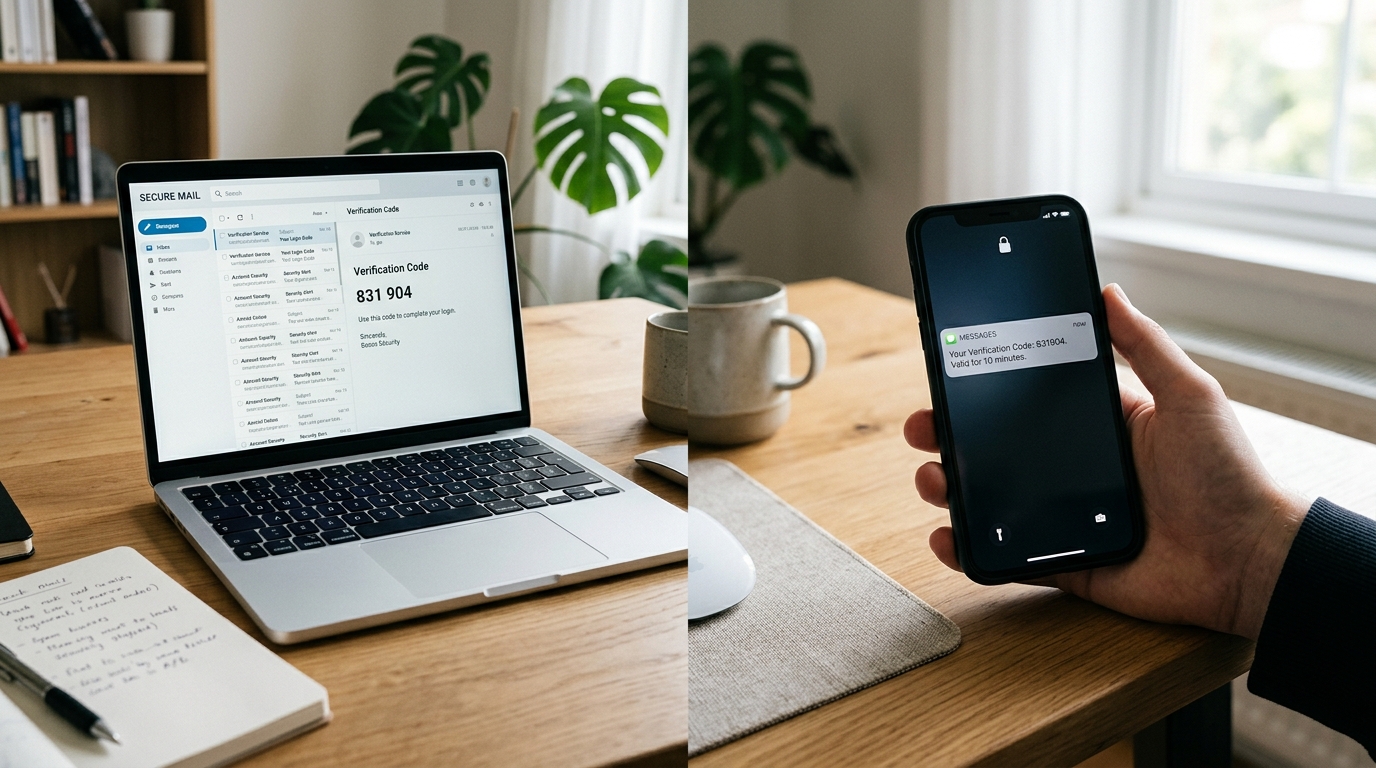
Receive SMS tools are becoming more task-specific than generic text apps
One of the clearest category trends is specialization. Generic text apps were often judged by whether they could send text, receive text, or mimic a normal messaging plan. But a verification-first app lives or dies by filtering, routing, and compatibility.
That is also why I think users should compare alternatives more carefully. A classic free texting app, a googlevoice-style service, and a verification utility are built around different assumptions. The first assumes ongoing conversation. The second often assumes a stable secondary identity. The third assumes you need fast access to codes with minimal setup.
If you want privacy during sign-up rather than a replacement for your carrier, Receive SMS&Temp Mail: CodeApp sits in that third category. It is, in one sentence, a mobile app for iPhone and Android users who need service-based temporary SMS numbers and temporary email addresses for sign-up verification without using their personal phone number. That makes it most relevant for students, freelancers, frequent app testers, online shoppers, marketplace users, and anyone who prefers not to hand out a personal number casually.
Who is this not for? Not for people who want a permanent business line, extensive calling features, or a full VoIP office system. If you need call routing, team extensions, or customer support infrastructure, you are in a different product category.
That distinction builds trust because it prevents the usual mismatch. Too many users download a communications app when what they really need is a verification-focused utility.
User questions reveal where confusion still happens
“Do I need a second phone number or just a new email account like ProtonMail?”
You need a second number when a service requires SMS verification. You need a separate email when you want inbox privacy or account separation. Many users benefit from both.
“Is a shared temporary phone number less useful than a permanent one?”
Not necessarily. For one-time or occasional verification, shared temporary access can be more efficient than maintaining another long-term number.
“Are free texting apps the same as verification apps?”
No. Some overlap exists, but the product logic is different. Free texting apps prioritize messaging continuity; verification apps prioritize code receipt and service matching.
The safest user strategy is controlled fragmentation
I do not recommend putting every account behind disposable infrastructure. That creates its own risks. What works best is controlled fragmentation: keep your real phone number and primary email for critical services, and use a separate layer for low-stakes registrations, trials, temporary projects, and exploratory sign-ups.
Aslı Çevik explained this well in her guide to choosing between temp mail, a 2nd phone number, and an authentication app. I would extend that argument with one extra point: the right tool is increasingly defined by duration. Ask yourself whether you need access for five minutes, five days, or five years. That question usually clarifies the decision faster than brand comparisons do.
It also helps to remember that the broader app ecosystem is moving toward narrower, more specialized utilities. That trend is visible well beyond this one app category. Teams building focused mobile tools through studios such as Verity are responding to a user base that wants smaller, clearer tools—not bloated all-purpose software.
The practical takeaway is to choose verification tools by workflow, not by hype
My opinion is simple: the second phone number market is splitting in two. One side serves long-term communication. The other serves identity buffering and verification. Most casual users searching for a spare phone number today are actually in the second group, even if they use older search terms like burner, textfree, pinger, or google voice alternatives.
So before you choose any app, define the workflow first. Are you trying to build a stable extra identity? Or are you trying to complete a sign-up without giving away your main phone number?
If it is the second case, judge the tool by how well it handles temporary access, service filtering, and paired options like temp mail. And if your goal is cleaner separation between verification identities and your main inbox, combining a temporary SMS workflow with a privacy-focused email setup such as ProtonMail often makes more sense than relying on a single permanent contact point for everything.
I have spent enough time studying temporary identity systems to be confident about this: users are not becoming harder to please. They are becoming more specific. That is a healthy shift, and it is why the future of the category belongs to tools designed around real verification behavior rather than the older fantasy that everyone wants another full-time phone line.